Key Takeaways
- Gentle stretches help maintain mobility and can reduce fall risk.
- Simple safety guidelines make stretching accessible for everyone.
- Upper and lower body stretches can be done seated or standing.
- Consistency matters more than intensity when building flexibility.
- Senior living communities offer wellness programs to support active lifestyles.
Move with Ease: Gentle Stretching to Support Flexibility and Independence
Your body tells a story through every movement—or the moments when movement becomes more challenging. Maybe you’ve noticed your shoulders feel tighter when you reach for something on a high shelf, or your legs feel stiff when you get up from your favorite chair.
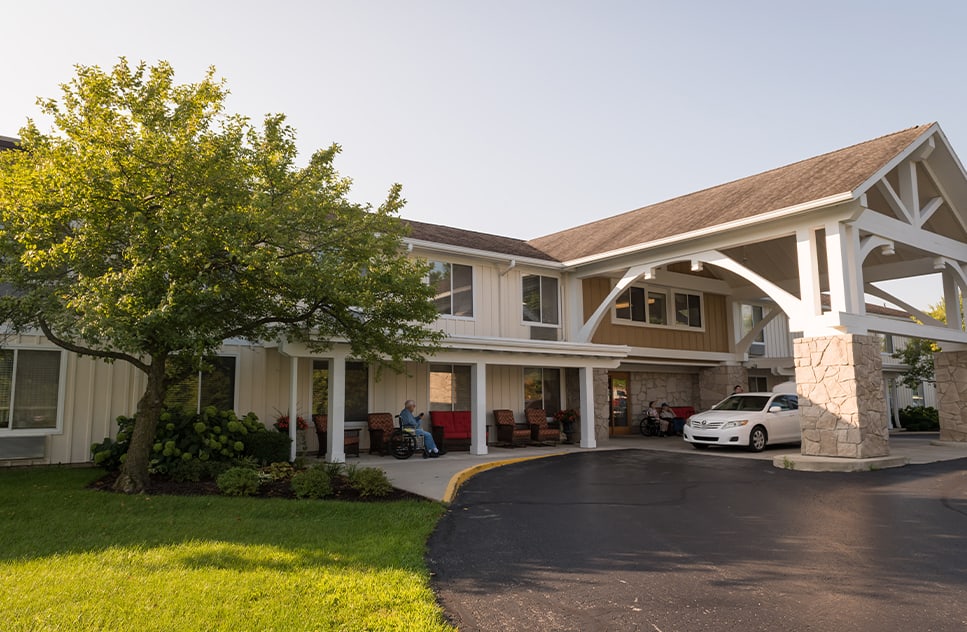
Gentle stretching can help you maintain flexibility, reduce discomfort, and support your independence as you go about your daily activities. The right stretches, done safely and consistently, become a natural part of feeling your most comfortable and confident. Kingston Residence of Fort Wayne understands how important mobility is for your daily comfort, and personalized wellness programs can support your journey toward maintaining an active lifestyle.
Why Gentle Stretches Matter for Your Daily Life
Stretching supports your body’s natural ability to move comfortably throughout the day. When you maintain flexibility in your muscles and joints, reaching for your morning coffee or turning to greet a friend feels easier and more natural.
Regular gentle movement helps reduce your risk of falls by improving your balance and coordination. Your muscles stay engaged and responsive, which means you can react more quickly if you need to steady yourself. This connection between flexibility and stability creates a foundation for confident movement.
Stiffness in your joints doesn’t have to be something you just accept. Gentle stretching encourages blood flow to your muscles and joints, which can help reduce that tight, uncomfortable feeling many people experience. You might notice less morning stiffness or find it easier to get comfortable in your chair.
Better circulation from regular movement also means more energy for the activities you enjoy. When blood flows more freely throughout your body, you may feel more alert and ready to participate in social activities, hobbies, or time with family.
Simple Safety Tips Before You Start
The right environment makes all the difference in your stretching routine. Choose a time when you feel most alert and comfortable—many people prefer morning stretches to start the day or gentle movements in the afternoon. Find a quiet space with good lighting where you won’t be interrupted.
Comfortable clothing helps you move freely without restriction. Loose-fitting pants and shirts with sleeves that don’t bind your arms work well. Supportive, non-slip shoes or bare feet give you better stability than socks alone.
Listen to your body’s signals throughout any movement. Gentle stretching should feel good—like a pleasant release rather than sharp pain or intense discomfort. If something doesn’t feel right, it’s always okay to stop or modify the movement to work for you.
Avoid stretching if you’re feeling dizzy, unwell, or if you’ve recently had surgery or an injury. Your body knows what it needs, and respecting those signals keeps you safe and comfortable. Simple exercise guidance can help you understand what movements work well for your current fitness level.
Easy Upper Body Stretches You Can Do Anywhere
Neck and Shoulder Relief
Your neck and shoulders carry a lot of daily tension. Start with gentle neck movements by slowly looking left, then right, as if you’re checking for traffic. Hold each position for a few comfortable breaths.
For shoulder relief, imagine you’re trying to squeeze a pencil between your shoulder blades. Hold this gentle squeeze for 3-5 seconds, then relax. This simple movement helps counter the forward pull many people feel in their shoulders.
Slow, controlled arm circles help loosen up your entire shoulder area. Start with small circles and gradually make them larger if it feels comfortable. Chair yoga exercises offer additional gentle movements you can try from the comfort of your seat.
Arms and Hands
Reach one arm gently overhead, like you’re placing something on a high shelf. You don’t need to strain—just reach to a comfortable height and hold for a few breaths. This movement helps maintain the range of motion you use in daily activities.
Your hands and wrists work hard throughout the day. Make gentle circles with your wrists, then open and close your fingers slowly. These simple movements can help reduce stiffness from activities like writing, cooking, or crafting.
Open your arms wide, as if you’re welcoming someone with a big hug. This gentle chest opening movement helps counter the tendency to round forward and can make breathing feel easier.
Lower Body Stretches for Better Mobility
Seated Leg Stretches
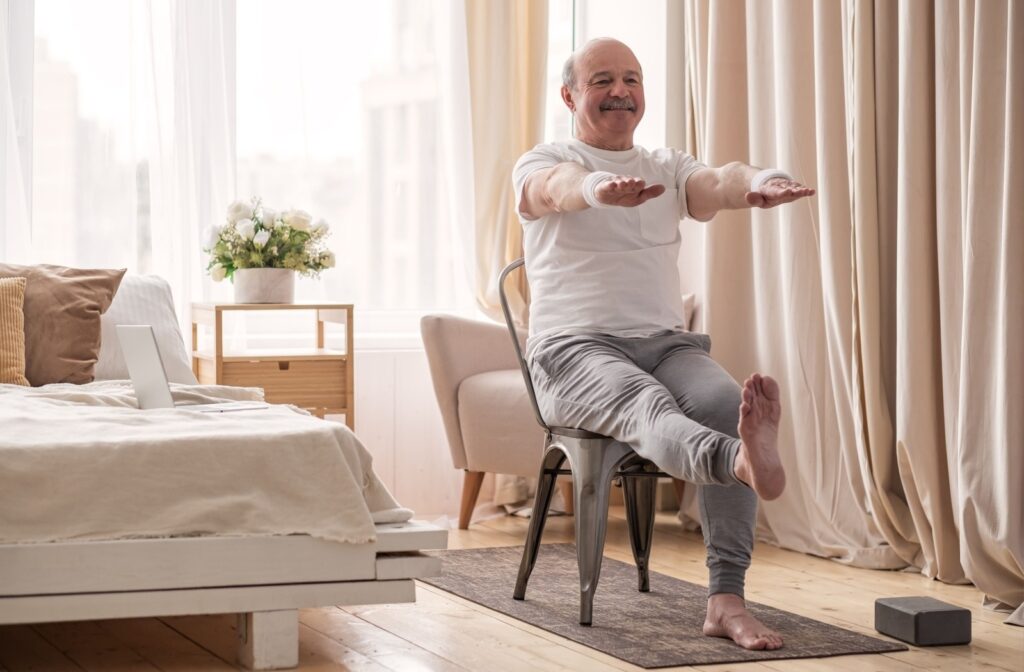
While sitting comfortably in your chair, lift one foot slightly off the ground and make slow circles with your ankle. This helps keep your ankles mobile and can improve circulation in your lower legs.
For a gentle hamstring stretch, extend one leg in front of you while seated and flex your foot so your toes point toward the ceiling. You should feel a mild, comfortable stretch along the back of your leg.
Seated hip movements help maintain mobility for walking and standing. While sitting tall, gently lift one knee slightly higher than the other, then alternate. This simple marching motion keeps your hip flexors engaged. Therapeutic activities can complement your stretching routine with additional gentle movements that support physical well-being.
Standing Balance and Flexibility
Using a wall for support, place one hand against it and step one foot back. Keep your back heel down and lean gently forward to feel a stretch in your calf. This movement supports the flexibility you need for comfortable walking.
With your hand still on the wall for balance, gently swing one leg forward and back, like a pendulum. Keep the movement small and controlled. This helps maintain hip mobility and balance.
Simple marching in place, lifting your knees to a comfortable height, helps maintain the coordination between your legs and can improve your overall balance and confidence. Exercise benefits for older adults demonstrate how regular movement contributes to maintaining independence and quality of life.
Stay Active and Independent—Connect with Our Wellness Team Today
At Kingston Residence of Fort Wayne, we understand that maintaining your mobility and independence matters deeply to your quality of life. Our wellness programs, 24/7 care support, and vibrant community activities are designed to help you stay active and engaged in ways that work for you.
Contact our caring team to learn more about how we can support your health and wellness goals.