Key Takeaways
- Puzzle games activate multiple brain regions, improving memory, focus, and problem-solving abilities.
- Regular puzzle play can enhance daily decision-making and multitasking skills.
- Both traditional and digital puzzles offer unique cognitive benefits.
- Social puzzle activities provide mental stimulation plus meaningful connections.
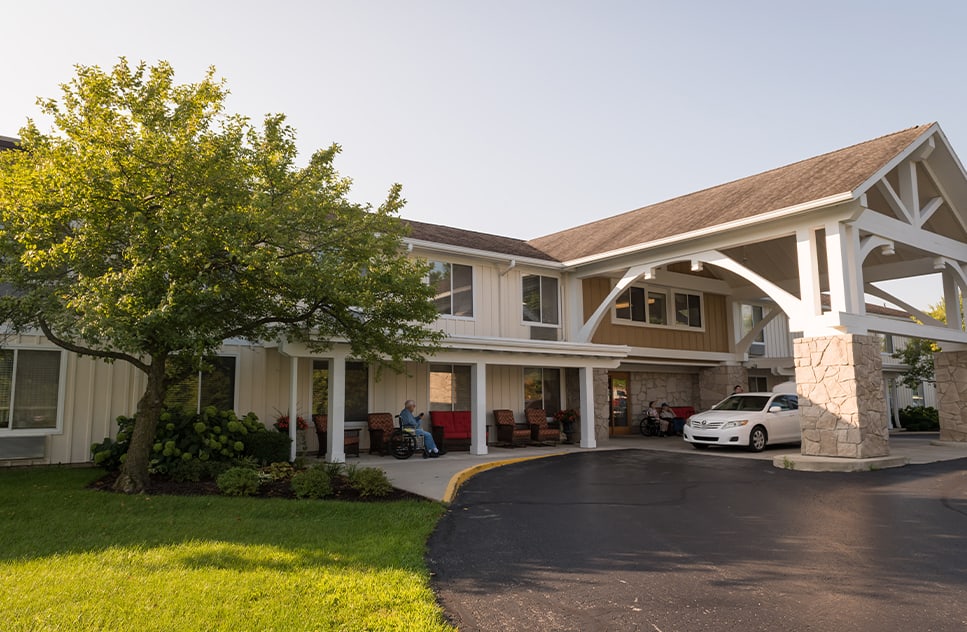
- Senior living communities like Kingston Residence integrate cognitive wellness into daily programming with 24/7 support.
Puzzle Games Provide Mental Stimulation
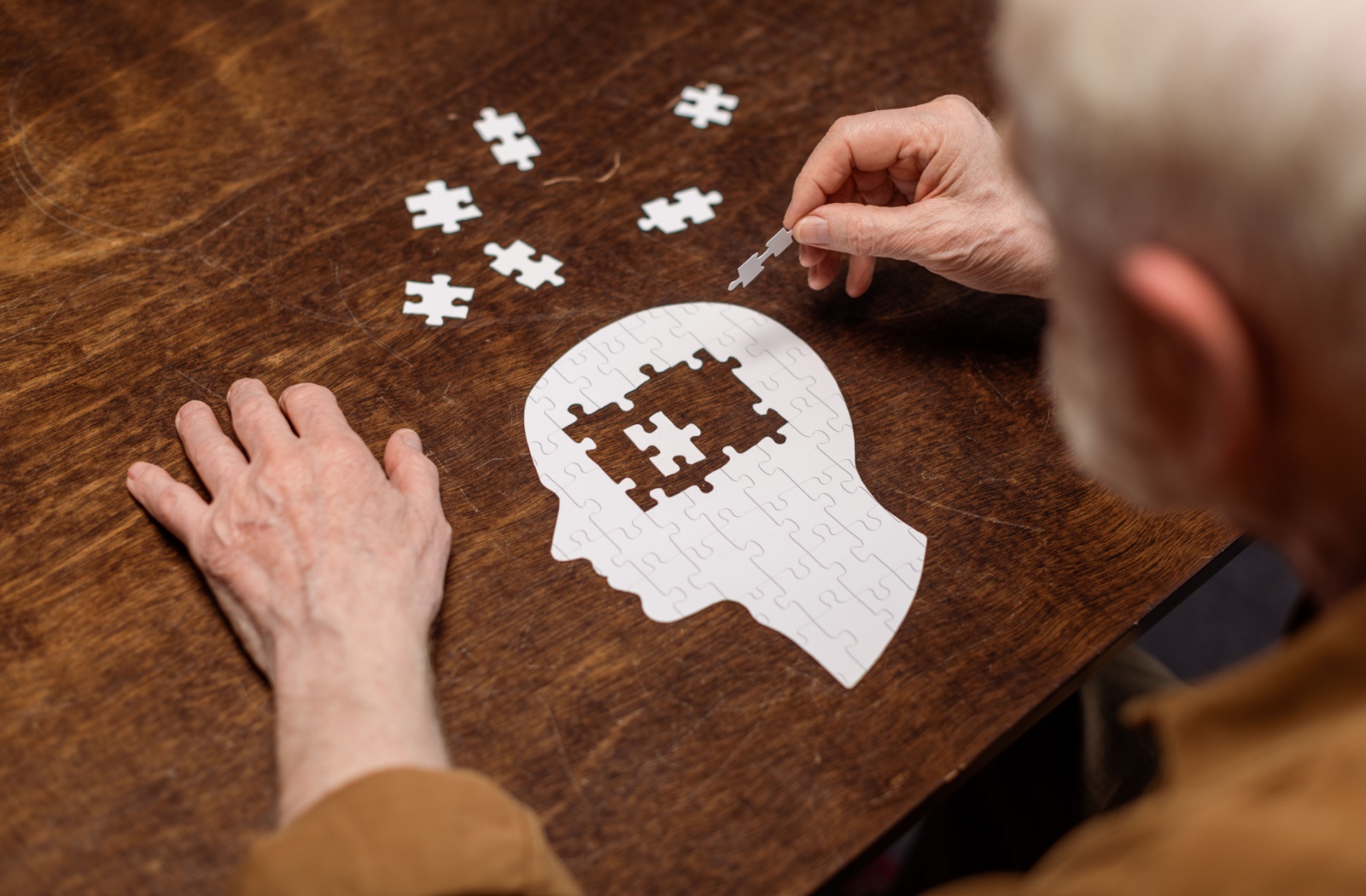
Your morning crossword puzzle does more than pass the time—it’s actually giving your brain a workout. When you tackle a jigsaw puzzle or work through a sudoku grid, you’re engaging multiple areas of your mind simultaneously, creating new neural pathways and strengthening existing ones.
Puzzle games can significantly strengthen cognitive abilities by challenging memory, problem-solving skills, attention span, and processing speed through regular mental exercise.
The key lies in consistent engagement with activities that require your brain to work in different ways, much like physical exercise strengthens various muscle groups. Kingston Residence of Fort Wayne understands the importance of cognitive wellness through engaging activities, and their holistic wellness services incorporate brain-boosting activities into daily programming.
What Puzzle Games Do for Your Mind
When you sit down with a challenging puzzle, your brain immediately shifts into problem-solving mode. Blood flow increases to areas responsible for concentration and logic, while neurons start firing in patterns that create stronger connections over time.
Think of puzzle games as cross-training for your mind. Just as swimming works different muscles than running, crosswords exercise different cognitive skills than sudoku puzzles. This variety keeps your brain adaptable and resilient.
The reward system in your brain also activates when you solve puzzles. That satisfying “aha!” moment when pieces click into place releases dopamine, making you want to continue the mental challenge.
Different Types of Mental Skills That Get Stronger
Memory improvement happens naturally as you recognize patterns and recall strategies that worked before. Your brain stores these successful approaches, making future puzzles easier to tackle.
Problem-solving abilities grow stronger because puzzles require you to approach challenges from multiple angles. You learn to break complex problems into smaller, manageable pieces — a skill that transfers to daily life situations.
Focus and concentration get a workout every time you block out distractions to complete a puzzle. Your attention span gradually increases as you practice sustained mental effort. Processing speed also improves as your brain gets faster at recognizing patterns and making connections.
Popular Puzzle Games That Support Brain Health
Crossword puzzles challenge your vocabulary and memory recall simultaneously. You’re not just remembering words—you’re accessing stored knowledge about history, culture, and language while fitting answers into intersecting grids.
Sudoku games strengthen logical thinking and pattern recognition. Each number you place requires analyzing multiple options, training your brain to consider consequences before making decisions.
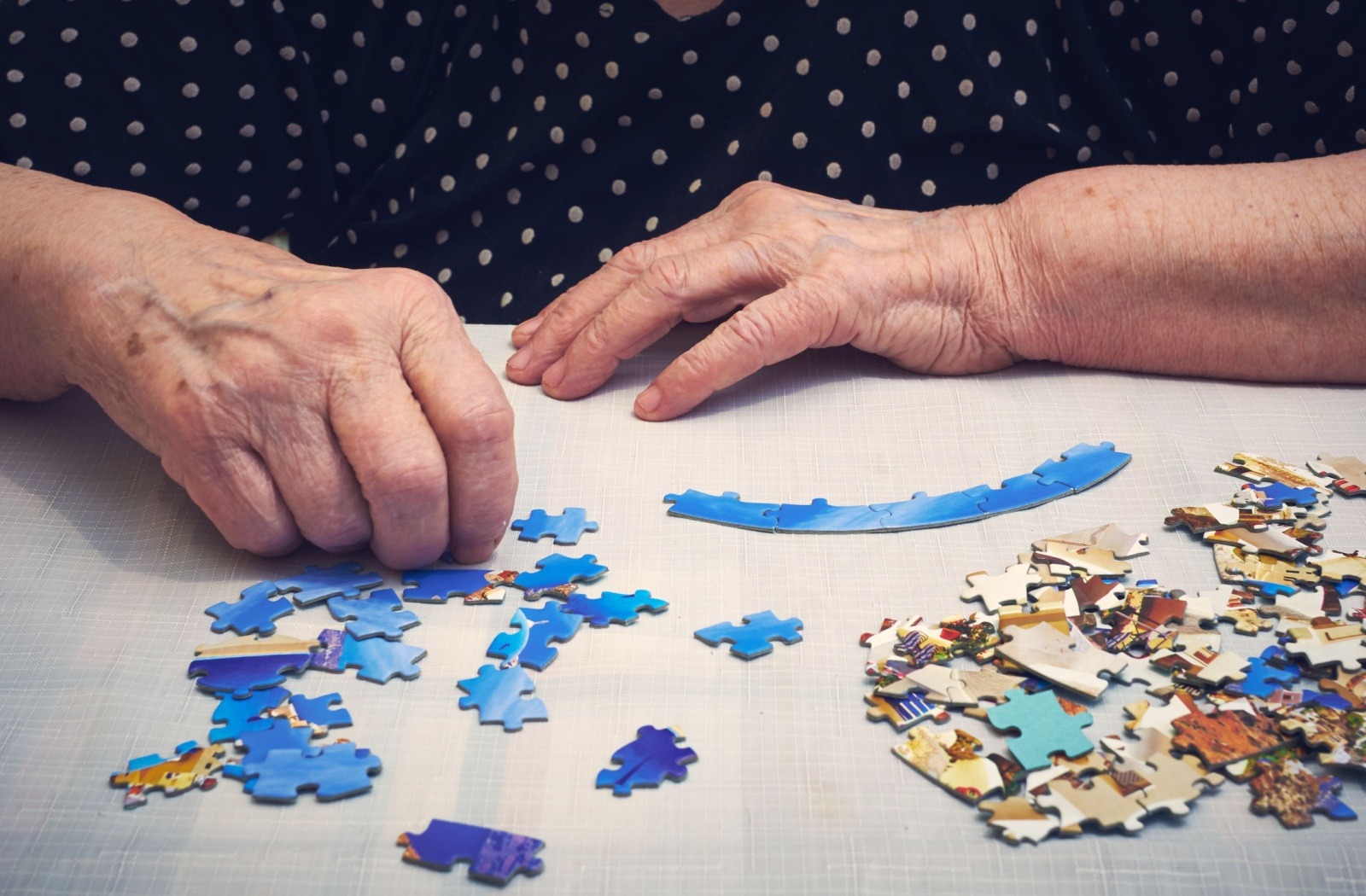
Jigsaw puzzles develop visual-spatial skills as you rotate pieces mentally and recognize how shapes fit together. This type of thinking helps with navigation, reading maps, and recognizing spatial relationships. Word games for seniors offer another way to maintain mental sharpness through engaging activities:
- Word search games sharpen attention to detail and scanning abilities
- Card games like bridge exercise memory and strategic thinking
- Number puzzles improve mathematical reasoning
- Logic puzzles enhance deductive reasoning skills
Digital vs. Traditional Puzzle Options
Hands-on puzzle activities engage your sense of touch and require fine motor skills. The physical act of placing puzzle pieces or writing in crossword squares creates additional neural pathways beyond pure cognitive processing.
Digital puzzle games offer convenience and adaptability. You can adjust difficulty levels, get hints when stuck, and access unlimited puzzle varieties. Many apps also track your progress, showing improvement over time.
Social puzzle games combine mental stimulation with human connection. Whether you’re working on a large jigsaw puzzle with family or competing in online word games with friends, these activities exercise both your cognitive abilities and social skills. Social interactions contribute significantly to happiness and well-being.
How Solving Puzzles Supports Daily Life
Enhanced decision-making abilities develop as you practice weighing options and considering consequences in puzzle scenarios. The same analytical thinking you use to solve a logic puzzle applies when you’re choosing between different daily activities or making household decisions.
Your multitasking skills improve because many puzzles require you to keep multiple pieces of information in mind simultaneously. This mental juggling act strengthens your ability to manage several tasks throughout your day.
Enhanced attention span from puzzle practice means you can focus longer on conversations, reading, or other activities you enjoy. Stronger recall for names, dates, and details naturally follows as your memory gets regular exercise through puzzle challenges. Social activities that benefit cognitive health can enhance these effects even further.
The Social Benefits of Group Puzzle Activities
Working on puzzles with others creates natural opportunities for conversation and shared accomplishment. You’re building connections while exercising your mind, making the cognitive benefits even more meaningful.
Friendly competition and teamwork emerge when groups tackle challenging puzzles together. Some people excel at finding edge pieces while others spot color patterns—everyone contributes their strengths.
These shared experiences often lead to laughter and storytelling, creating positive memories associated with mental exercise. The social aspect makes cognitive wellness feel less like work and more like enjoyable recreation.
How Senior Living Communities Support Cognitive Wellness
Organized puzzle groups and game nights provide structure and social interaction around cognitive activities. You’ll find people with similar interests and skill levels to challenge and support one another.
Access to varied puzzle libraries means you’re never stuck doing the same type of mental exercise. Communities often stock different difficulty levels and puzzle types to match diverse preferences and abilities.
Professional staff can adapt activities to individual needs and preferences. If you love word games but struggle with small print, you can find digital alternatives or large-print versions that keep you engaged. Therapeutic activities for seniors can be adapted to meet various physical and cognitive needs.
At Kingston Residence of Fort Wayne, a diverse selection of puzzles and games caters to all skill levels and interests. Social activities combine fun with cognitive exercise, while 24/7 support lets you pursue mental wellness whenever inspiration strikes. The team provides personalized activity recommendations based on what you enjoy most, making cognitive wellness both engaging and supportive.
Contact Kingston Residence of Fort Wayne today to learn more about their comprehensive approach to cognitive wellness through enriching activities and compassionate care.